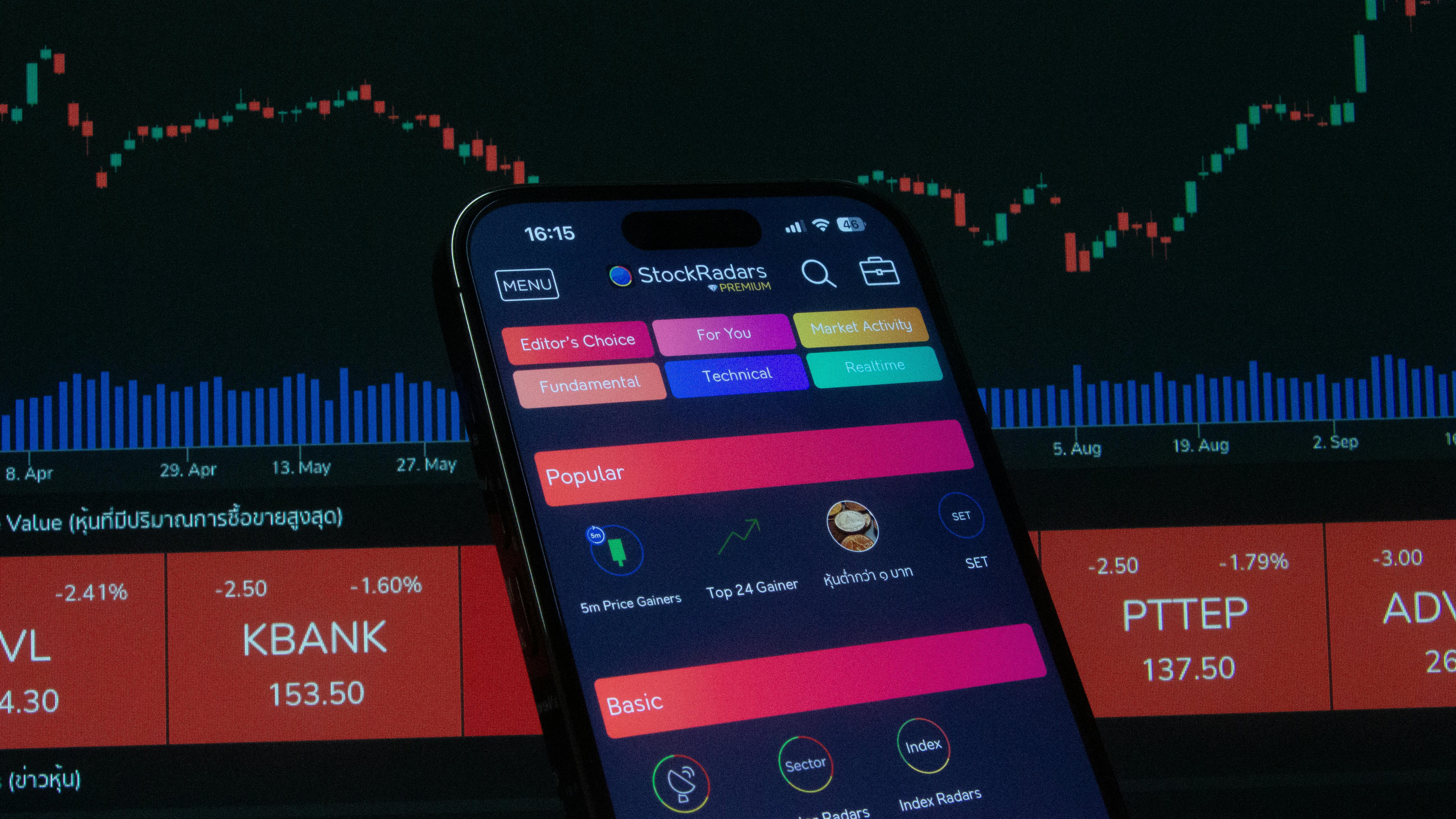
Unveiling Market Mysteries: A Data-Driven Crystal Ball for Savvy Investors

The Art of Market Prediction: Why Data is the New Crystal Ball
For centuries, investors have sought the holy grail of financial forecasting— a reliable way to peer into the future of markets. While the traditional “gut feeling” approach still lingers in some corners of the investment world, the rise of big data and advanced analytics has democratized predictive power. Today, savvy investors no longer rely solely on intuition or outdated indicators. Instead, they turn to data-driven insights, transforming raw numbers into a forward-looking crystal ball. This shift isn’t about replacing human judgment but enhancing it with precision, speed, and objectivity. In this article, we’ll explore how data analytics is unraveling market mysteries and empowering investors to make smarter, more strategic decisions.
Understanding Market Mysteries: What Makes Predictions So Challenging?
Markets are chaotic ecosystems influenced by countless variables—economic indicators, geopolitical events, investor sentiment, technological disruptions, and even social media trends. These factors interact in unpredictable ways, creating what economists call “market noise.” Unlike physics, where laws govern behavior with certainty, financial markets operate under probabilities and human behavior, which is often irrational. This complexity makes accurate prediction inherently difficult. However, this is precisely where data-driven approaches shine. By identifying patterns, correlations, and anomalies within vast datasets, investors can reduce uncertainty and improve their forecasting accuracy.
Common Market Mysteries Investors Face
- Volatility Spikes: Sudden market crashes or rallies often seem to come out of nowhere. Data analysis can help detect early warning signs.
- Sector Rotation: Identifying which industries will outperform or underperform in different economic cycles is challenging. Predictive models can highlight shifting trends.
- Earnings Surprises: Companies often beat or miss analyst expectations. Data-driven models can forecast earnings surprises by analyzing historical patterns and alternative data sources.
- Macro Events: Elections, pandemics, and central bank policies create ripple effects across markets. Real-time data streams allow investors to react faster and more intelligently.
- Behavioral Biases: Investors often act emotionally—fear, greed, and herd mentality drive prices. Sentiment analysis tools can quantify these biases and suggest contrarian strategies.
Data Sources: Building the Foundation for Predictive Intelligence
To build a reliable predictive model, investors must first gather high-quality, diverse data. The modern financial ecosystem offers an unprecedented range of data sources, each serving a unique purpose in unraveling market mysteries.
Core Data Categories
- Traditional Market Data: This includes price, volume, and historical returns from stock exchanges. It forms the backbone of most quantitative models.
- Fundamental Data: Financial statements, earnings reports, debt ratios, and valuation metrics provide insight into a company’s health and growth potential.
- Alternative Data: A rapidly growing category that includes satellite imagery, credit card transactions, web traffic, social media sentiment, and supply chain data. These unconventional sources offer a competitive edge.
- Macroeconomic Indicators: GDP growth, inflation rates, unemployment data, and central bank policy decisions directly impact market direction.
- News and Sentiment Data: Real-time news feeds, earnings call transcripts, and social media chatter reveal public perception and emerging trends.
The Power of Alternative Data in Modern Investing
Alternative data has revolutionized market prediction by providing insights that traditional datasets cannot. For example, hedge funds now track parking lot occupancy at retail stores to gauge foot traffic, or analyze satellite images of oil tankers to predict crude oil supplies. In the age of the internet, even seemingly mundane data—like job postings on LinkedIn or mentions of a company on Reddit—can signal future performance. The key is to identify which alternative data sources are relevant to your investment thesis and integrate them into predictive models.
Predictive Models: Turning Data into Actionable Insights
Once data is collected, the next step is to process it using predictive models. These models range from simple to highly complex, depending on the investment strategy and data volume. The goal is to transform historical patterns into forward-looking forecasts.
Types of Predictive Models Used in Investing
- Time Series Models: Tools like ARIMA (AutoRegressive Integrated Moving Average) and exponential smoothing are used to forecast future prices based on past trends. They work well for short-term market movements.
- Machine Learning Algorithms: Supervised learning models—such as Random Forests, Support Vector Machines, and Neural Networks—can detect complex patterns in large datasets, including nonlinear relationships.
- Natural Language Processing (NLP): Used to analyze text data from news articles, earnings calls, and social media. NLP models can identify sentiment trends and predict market reactions to news events.
- Reinforcement Learning: A cutting-edge approach where models learn from their own decisions and improve over time, adapting to changing market conditions.
- Ensemble Methods: Combining multiple models to improve accuracy. For example, blending a time series model with a sentiment analysis model can yield more robust predictions.
Case Study: How Hedge Funds Use Predictive Models
One well-known example is Renaissance Technologies, whose Medallion Fund has consistently outperformed the market for decades. The fund relies heavily on statistical arbitrage and machine learning models, analyzing thousands of potential signals from market data, alternative sources, and even sports betting trends. Another example is Two Sigma, which uses data science to identify mispriced assets by modeling everything from macroeconomic indicators to weather patterns. These firms treat the market as a data-rich laboratory, where every piece of information—no matter how obscure—could hold predictive value.
Putting It All Together: A Step-by-Step Guide for Investors
Building a data-driven investment strategy doesn’t require a PhD in statistics or access to a supercomputer. With the right tools and approach, even individual investors can harness the power of predictive analytics.
Steps to Implement a Data-Driven Investment Strategy
- Define Your Objective: Are you looking to time the market, pick stocks, or manage risk? Your goal will determine the data and models you need.
- Collect and Clean Data: Gather data from reliable sources and ensure it’s accurate, consistent, and free from errors. Data cleaning is often the most time-consuming step.
- Choose Your Tools: Platforms like Python (with libraries such as Pandas, Scikit-learn, and TensorFlow), R, and specialized financial software (e.g., Bloomberg Terminal, FactSet) can help process and analyze data.
- Develop or Select a Model: Start with simple models and gradually increase complexity as you gain confidence. Backtest your model using historical data to evaluate performance.
- Monitor and Refine: Markets evolve, and so should your models. Continuously update your data inputs and refine your algorithms based on new information and performance feedback.
- Combine Human Judgment with Data: Data enhances decision-making but doesn’t replace it entirely. Use your insights to inform trades, not dictate them blindly.
The Limitations: Why Even the Best Models Can Fail
While data-driven investing offers significant advantages, it’s not infallible. Markets are influenced by unpredictable black swan events—like the 2008 financial crisis or the COVID-19 pandemic—that fall outside historical patterns. Models trained on past data may struggle to account for unprecedented disruptions. Additionally, overfitting—where a model performs well on historical data but poorly in real-world conditions—can lead to costly mistakes. Data quality is another critical issue; inaccurate or incomplete data can produce misleading signals. Finally, the “garbage in, garbage out” principle applies: if the underlying data is flawed, even the most sophisticated model will fail.
Common Pitfalls to Avoid
- Over-Reliance on Backtesting: A model that performs well on past data may not work in live markets. Always test in real-world conditions.
- Ignoring Regulatory Changes: New laws or tax policies can invalidate assumptions built into your model.
- Data Overload: Too much data can lead to noise rather than signal. Focus on quality over quantity.
- Model Drift: Market dynamics change over time. Regularly update and retrain your models to avoid decay.
The Future of Data-Driven Investing: Trends to Watch
The field of predictive investing is evolving rapidly, driven by advancements in technology and data science. Several trends are poised to reshape the landscape in the coming years.
Emerging Trends in Financial Data Analytics
- AI-Powered Investing: Artificial intelligence is becoming more sophisticated, with deep learning models capable of processing unstructured data (e.g., satellite images, audio from earnings calls) at scale.
- Quantamental Investing: The fusion of quantitative and fundamental analysis is gaining traction. Investors combine data-driven insights with traditional valuation methods to improve decision-making.
- Real-Time Analytics: The ability to analyze data in milliseconds enables high-frequency trading and algorithmic strategies that respond instantly to market changes.
- ESG Data Integration: Environmental, Social, and Governance (ESG) factors are increasingly important to investors. Data on sustainability and corporate responsibility is being woven into predictive models.
- Blockchain and Decentralized Data: Blockchain technology offers secure, transparent data sharing, reducing fraud and improving trust in alternative datasets.
Conclusion: Empower Your Investments with Data Wisdom
In today’s fast-paced financial landscape, the investors who thrive are those who embrace data as their guiding light. While no crystal ball can guarantee perfect predictions, data-driven strategies significantly reduce guesswork and increase the odds of success. The key lies in combining robust data collection, advanced analytics, and disciplined execution. As technology continues to evolve, the gap between savvy and unsophisticated investors will only widen. The question is no longer whether to use data, but how deeply and intelligently to integrate it into your investment process. For those willing to learn, adapt, and innovate, the market’s mysteries are not insurmountable—they are opportunities waiting to be uncovered.