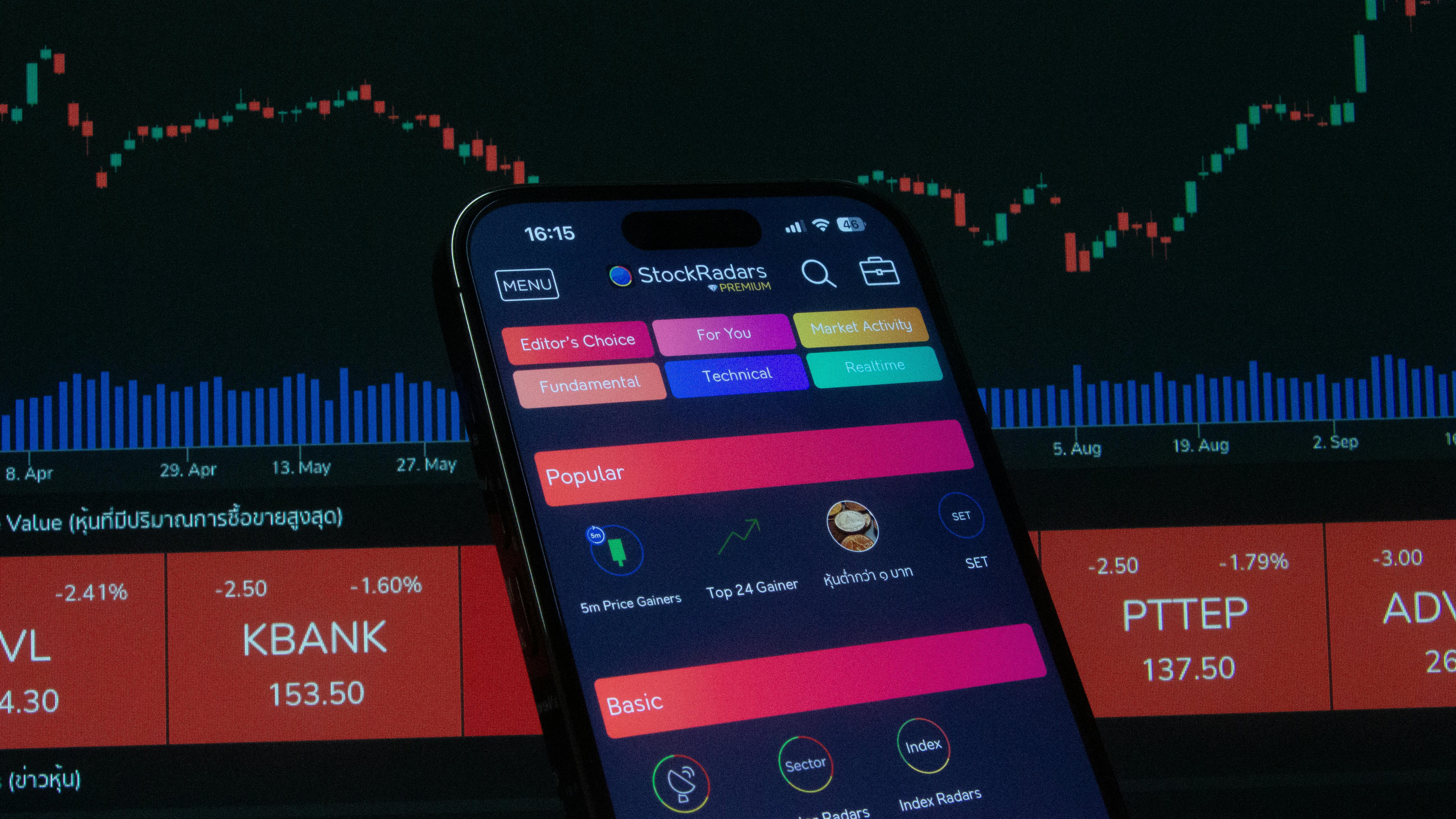
Navigating the Storm: How to Profit from Market Volatility Like a Pro

Navigating the Storm: How to Profit from Market Volatility Like a Pro
Market volatility is often seen as a double-edged sword—it can wipe out portfolios in minutes or create lucrative opportunities for those who know how to capitalize on it. For seasoned traders and investors, volatility isn’t a threat but a playground where fortunes are made. Whether it’s driven by economic uncertainty, geopolitical tensions, or sudden shifts in investor sentiment, volatility creates price swings that can be exploited for profit. The key lies in understanding the mechanics of volatility, adopting the right strategies, and maintaining discipline in high-pressure situations. In this guide, we’ll explore how to turn market turbulence into a wealth-building advantage.
Why Volatility Isn’t the Enemy
At its core, volatility is simply the rate and magnitude of price changes in an asset. While extreme volatility can signal panic or instability, moderate to high volatility often presents opportunities for traders who are prepared. The stock market, for instance, historically delivers an average annual return of around 7-10%, but these returns are rarely smooth. Instead, they come in fits and starts, with sharp rises and falls. Savvy investors recognize that volatility is the price of admission for higher-than-average returns. The difference between success and failure lies in how one responds to these fluctuations.
Moreover, volatility can expose inefficiencies in the market, creating mispricings that astute traders can exploit. For example, during a market downturn, panic selling can drive prices of fundamentally strong companies below their intrinsic value. Buying these undervalued assets when others are fearful can lead to substantial long-term gains. Warren Buffett’s famous advice to “be fearful when others are greedy, and greedy when others are fearful” underscores the profit potential in volatile markets. The challenge is to separate emotion from strategy and act decisively when others hesitate.
Understanding the Sources of Volatility
Before devising a plan to profit from volatility, it’s essential to understand what drives it. Several factors can trigger market turbulence:
- Economic Indicators: Reports such as GDP growth, inflation rates (CPI), unemployment figures, and interest rate decisions by central banks can cause sharp market reactions. For example, an unexpected rise in inflation may lead to fears of aggressive interest rate hikes, sparking a sell-off in equities.
- Geopolitical Events: Wars, sanctions, political elections, and trade disputes can create uncertainty, leading to volatility across global markets. The 2022 Russian invasion of Ukraine, for instance, caused energy prices to surge and sent stock markets reeling.
- Corporate Earnings: Disappointing or surprising earnings reports can lead to violent price swings in individual stocks. Companies that miss earnings estimates often see their stock prices plummet, while those beating expectations may surge.
- Market Sentiment: Investor psychology plays a massive role in volatility. Fear and greed can amplify price movements, creating bubbles or crashes. Social media and algorithmic trading have further accelerated sentiment-driven volatility.
- Liquidity Crises: When market liquidity dries up, even small trades can cause large price swings. This was evident during the 2008 financial crisis and the early days of the COVID-19 pandemic in March 2020.
Recognizing the catalyst behind volatility helps traders position themselves appropriately. For instance, if a volatility spike is driven by a temporary liquidity crisis, it may present a buying opportunity. Conversely, if the issue is structural (like a recession), a more defensive approach may be warranted.
Strategies to Profit from Volatility
Not all strategies work in every volatile environment, but the following approaches have proven effective for traders and investors looking to capitalize on market turbulence:
1. Swing Trading and Momentum Strategies
Swing trading involves holding positions for several days to weeks to capture short-term price movements. During volatile periods, momentum strategies—where traders buy assets that are trending upward and sell those in decline—can be particularly profitable. The key is to identify strong trends early and avoid getting caught in reversals. Technical indicators like the Relative Strength Index (RSI), Moving Average Convergence Divergence (MACD), and Bollinger Bands can help spot overbought or oversold conditions.
For example, during the meme stock frenzy of early 2021, traders who recognized the momentum behind stocks like GameStop and AMC could have profited handsomely by riding the wave. However, momentum strategies require strict risk management to avoid significant drawdowns when trends reverse.
2. Options Trading: Hedging and Speculation
Options provide a powerful tool for profiting from volatility. A straddle or strangle strategy involves buying both a call and a put option on the same asset with the same expiration date. This allows the trader to profit from large price movements in either direction, regardless of whether the market rises or falls. Options are particularly useful in highly uncertain markets where directional bets are risky.
Additionally, options can be used for hedging. Investors with long-term portfolios can purchase put options to protect against downside risk. While this limits potential gains, it provides a safety net during market crashes. For example, during the COVID-19 sell-off in early 2020, traders who hedged their portfolios with put options avoided catastrophic losses.
3. Mean Reversion Trading
Mean reversion is the idea that asset prices eventually return to their historical average or “mean.” During volatile markets, prices often overshoot, creating opportunities for contrarian traders. For instance, if a stock drops 20% in a single day due to panic selling, a mean reversion trader might buy the dip, expecting the price to revert to its average over time.
This strategy works best in liquid markets with stable fundamentals. Tools like the standard deviation or z-score can help identify when a price is significantly deviated from its mean. However, mean reversion requires patience and a strong conviction in the asset’s long-term value.
4. Dollar-Cost Averaging (DCA) for Long-Term Investors
While not a short-term profit strategy, dollar-cost averaging can be an effective way for long-term investors to benefit from volatility. By consistently investing fixed amounts at regular intervals, investors reduce the impact of market timing. During volatile periods, this approach allows them to buy more shares when prices are low and fewer when prices are high.
For example, an investor who contributed $1,000 to an index fund every month would have bought more shares during the 2008 financial crisis or the 2020 pandemic crash, ultimately lowering their average cost per share. DCA is a disciplined strategy that removes emotion from investing and leverages volatility to build wealth over time.
5. Arbitrage and Relative Value Trading
Arbitrage involves exploiting price differences of the same asset in different markets or related assets in the same market. For instance, if a stock is trading at $100 on one exchange and $101 on another, a trader can buy on the cheaper exchange and sell on the more expensive one for a risk-free profit (assuming no transaction costs or delays).
Relative value trading extends this idea to pairs of related assets, such as two oil stocks or two cryptocurrencies. When the price relationship between these assets deviates from historical norms, traders can take positions betting on a return to equilibrium. This strategy requires deep market knowledge and sophisticated tools but can be highly profitable in volatile markets where mispricings are common.
Risk Management: The Cornerstone of Profiting from Volatility
Profitability in volatile markets is as much about avoiding losses as it is about making gains. Without proper risk management, even the best strategies can lead to significant drawdowns. Here are essential risk management techniques to implement:
- Position Sizing: Never risk more than a small percentage of your portfolio (typically 1-2%) on a single trade. This ensures that even a series of losses won’t wipe out your capital.
- Stop-Loss Orders: Always use stop-loss orders to limit downside risk. A stop-loss automatically sells a position if the price falls to a predetermined level, preventing emotional decision-making during market crashes.
- Diversification: Spread your investments across different asset classes, sectors, and geographies to reduce exposure to any single source of volatility. A diversified portfolio is less likely to suffer catastrophic losses during a market downturn.
- Leverage Caution: While leverage can amplify gains in volatile markets, it also magnifies losses. Use leverage sparingly and only if you fully understand the risks. Many traders have been wiped out by overleveraging during sudden market reversals.
- Emotional Discipline: Volatile markets are a test of emotional control. Fear and greed can lead to impulsive decisions, such as panic selling or FOMO buying. Stick to your strategy and avoid making decisions based on short-term emotions.
One of the most famous examples of poor risk management in volatile markets is the collapse of Long-Term Capital Management (LTCM) in 1998. Despite having Nobel laureates on its team and sophisticated models, LTCM failed because it underestimated the impact of extreme market conditions and overleveraged its positions. This serves as a stark reminder that even the best strategies can fail without proper risk controls.
Tools and Resources for Trading Volatility
To profit from volatility, traders need the right tools to analyze markets, execute trades, and manage risk. Here are some essential resources:
- Technical Analysis Platforms: Tools like TradingView, MetaTrader, and ThinkorSwim provide advanced charting capabilities, indicators, and backtesting features. These platforms help traders identify patterns, trends, and potential entry/exit points in volatile markets.
- News and Data Feeds: Real-time news sources like Bloomberg, Reuters, and CNBC, as well as economic calendars (e.g., Forex Factory), are crucial for staying ahead of volatility triggers. Social media platforms like Twitter and Reddit (e.g., WallStreetBets) can also provide early signals of market sentiment shifts.
- Options Chains and Calculators: For options traders, platforms like TD Ameritrade, Interactive Brokers, and OptionMetrics offer options chains, volatility indexes (e.g., VIX), and calculators to assess potential profits and risks.
- Risk Management Software: Tools like Riskalyze and Portfolio Visualizer help investors assess their portfolio’s risk exposure and simulate different market scenarios.
- Algorithmic Trading Bots: For advanced traders, algorithmic trading platforms like QuantConnect and MetaTrader allow the automation of trading strategies, including those designed to profit from volatility. These bots can execute trades faster than humans and remove emotional bias.
Psychological Resilience: Mastering the Mental Game
No discussion about profiting from volatility would be complete without addressing the psychological challenges it presents. Volatile markets are a test of mental fortitude, and those who succumb to fear or overconfidence often end up on the losing side. Here’s how to cultivate the right mindset:
Accept Uncertainty: Markets are inherently unpredictable, and volatility is a natural part of the process. Instead of trying to predict the future, focus on managing risk and reacting to what the market presents.
Stay Patient: Volatility often creates short-term noise that can obscure the bigger picture. Avoid the temptation to overtrade or chase quick profits. Sometimes, the best move is to wait for a clear trend to emerge.
Learn from Losses: Even the best traders experience losses. Instead of dwelling on them, analyze what went wrong and adjust your strategy accordingly. Every loss is a lesson in disguise.
Develop a Routine: Establish a daily routine that includes market analysis, trade reviews, and risk assessments. Consistency reduces impulsive decision-making and keeps emotions in check.
Avoid Overconfidence: A string of successful trades can lead to overconfidence, causing traders to take excessive risks. Remember that market conditions can change rapidly, and past performance is not indicative of future results.
One of the greatest psychological hurdles in volatile markets is the fear of missing out (FOMO). This often leads traders to buy at the top of a rally or chase momentum into a bubble. Counteract FOMO by sticking to your predefined entry and exit rules and avoiding impulsive trades.
Case Studies: Real-World Examples of Profiting from Volatility
Learning from real-world examples can provide invaluable insights into how volatility can be harnessed for profit. Here are a few notable cases:
1. The 2008 Financial Crisis: Buying the Dip
During the 2008 global financial crisis, many investors panicked and sold their holdings at depressed prices. However, those who recognized the long-term value of blue-chip stocks like Bank of America, Citigroup, and Goldman Sachs reaped massive rewards. By 2012, these stocks had rebounded significantly, delivering returns of over 200% for early buyers. The key takeaway is that volatility often creates opportunities to buy high-quality assets at a discount.
2. The COVID-19 Crash of March 2020
When the COVID-19 pandemic hit, global markets experienced one of the fastest crashes in history, with the S&P 500 dropping nearly 34% in just over a month. However, traders who used options strategies like buying put options for hedging or employing straddles to bet on volatility profited handsomely. Additionally, those who dollar-cost averaged into the market during the downturn saw substantial gains as markets recovered. The lesson here is that volatility can be both a risk and an opportunity, depending on how you position yourself.
3. The GameStop Short Squeeze of 2021
The GameStop (GME) short squeeze in January 2021 is a prime example of how volatility can be exploited through collective action. A group of retail investors on Reddit’s WallStreetBets forum coordinated a massive buying campaign to drive up the price of heavily shorted stocks. This created a short squeeze, forcing hedge funds that had bet against these stocks to cover their positions at huge losses. While this event was driven by sentiment rather than fundamentals, it highlights how volatility can be amplified by coordinated action, creating opportunities for outsized gains.
4. Bitcoin’s 2020-2021 Volatility
Bitcoin is notorious for its extreme volatility, with prices swinging by double-digit percentages in a single day. Traders who capitalized on these swings using high-frequency trading strategies, options, or leveraged positions made substantial profits. For example, during Bitcoin’s bull run in late 2020 and early 2021, traders who bought dips and sold into rallies could have achieved returns exceeding 100%. However, this also underscores the importance of risk management, as Bitcoin’s volatility can just as easily lead to significant losses.
Common Mistakes to Avoid in Volatile Markets
Even experienced traders can fall victim to common pitfalls when navigating volatile markets. Being aware of these mistakes can help you stay on the right path:
- Overtrading: The urge to constantly trade during volatile periods can lead to excessive fees, taxes, and poor decision-making. Stick to your strategy and avoid the temptation to overtrade.
- Ignoring Risk Management: Failing to use stop-loss orders, proper position sizing, or diversification can result in catastrophic losses. Always prioritize risk management over potential gains.
- Chasing Momentum Blindly: While momentum strategies can be profitable, blindly following trends without analysis can lead to buying at the top and selling at the bottom. Always assess the sustainability of a trend before jumping in.
- Neglecting Fundamental Analysis: In volatile markets, it’s easy to get caught up in short-term price movements and ignore the underlying fundamentals of an asset. Always consider the long-term value and health of a company or asset.
- Letting Emotions Dictate Decisions: Fear and greed are the enemy of profitability. Avoid making impulsive decisions based on emotions, and stick to your predefined plan.
- Underestimating Black Swan Events: Rare, unpredictable events (e.g., pandemics, wars, or regulatory shocks) can cause extreme volatility. While you can’t predict them, you can prepare by maintaining a diversified portfolio and having a contingency plan.
Building a Volatility-Proof Portfolio
For long-term investors, building a portfolio that can withstand and even benefit from volatility is essential. A volatility-proof portfolio isn’t about avoiding market swings but about positioning yourself to capitalize on them while minimizing downside risk. Here’s how to construct one:
1. Diversify Across Asset Classes
Diversification is the foundation of a resilient portfolio. By spreading investments across stocks, bonds, commodities, real estate, and alternative assets like cryptocurrencies or private equity, you reduce the impact of volatility in any single asset class. For example, during stock market downturns, bonds or gold often act as safe havens, providing stability to your portfolio.
2. Include Defensive Stocks
Defensive stocks belong to industries that are less sensitive to economic cycles, such as healthcare, utilities, and consumer staples. These companies tend to perform well even during recessions, providing a buffer against market volatility. Examples include Johnson & Johnson, Procter & Gamble, and NextEra Energy.
3. Allocate to Gold and Other Safe Havens
Gold has long been considered a hedge against volatility and inflation. When stock markets falter, investors often flock to gold, driving up its price. Other safe-haven assets include U.S. Treasury bonds, the Swiss franc, and the Japanese yen. Including a small allocation (5-10%) of your portfolio in these assets can provide stability during turbulent times.
4. Consider Volatility Indexes (VIX)
The CBOE Volatility Index (VIX), often called the “fear gauge,” measures market expectations of near-term volatility. While you can’t directly invest in the VIX, you can use VIX-related products like VIX futures, options, or inverse ETFs (e.g., ProShares VIX Short-Term Futures ETF) to hedge your portfolio or profit from expected volatility spikes. However, these instruments are complex and risky, so approach them with caution.
5. Maintain Cash Reserves
Holding a portion of your portfolio in cash or cash equivalents (e.g., money market funds) provides liquidity to take advantage of opportunities during market downturns. Cash also acts as a buffer, allowing you to avoid selling assets at depressed prices when you need liquidity. A common rule of thumb is to keep 5-10% of your portfolio in cash for such purposes.
Final Thoughts: Embracing Volatility as an Opportunity
Market volatility is not a bug in the financial system but a feature. It is the mechanism through which prices adjust to new information, and it creates the conditions for profit. The difference between those who suffer during volatile periods and those who thrive lies in preparation, strategy, and mindset. By understanding the sources of volatility, adopting the right trading strategies, managing risk effectively, and maintaining emotional discipline, you can turn market storms into lucrative opportunities.
Remember that volatility is a temporary state, not a permanent condition. Markets have always recovered from downturns, and those who stay the course—while capitalizing on the opportunities volatility presents—often emerge stronger. Whether you’re a short-term trader, a long-term investor, or somewhere in between, the key to profiting from volatility is to approach it with curiosity, discipline, and a willingness to learn.
As the legendary trader Jesse Livermore once said, “The big money is not in the buying or selling but in the waiting.” In volatile markets, the ability to wait for the right moment—while others panic—can make all the difference between a good year and a great one. So, embrace the volatility, stay informed, and trade with purpose. The storm is coming, but for those who are prepared, it’s also where the opportunities lie.