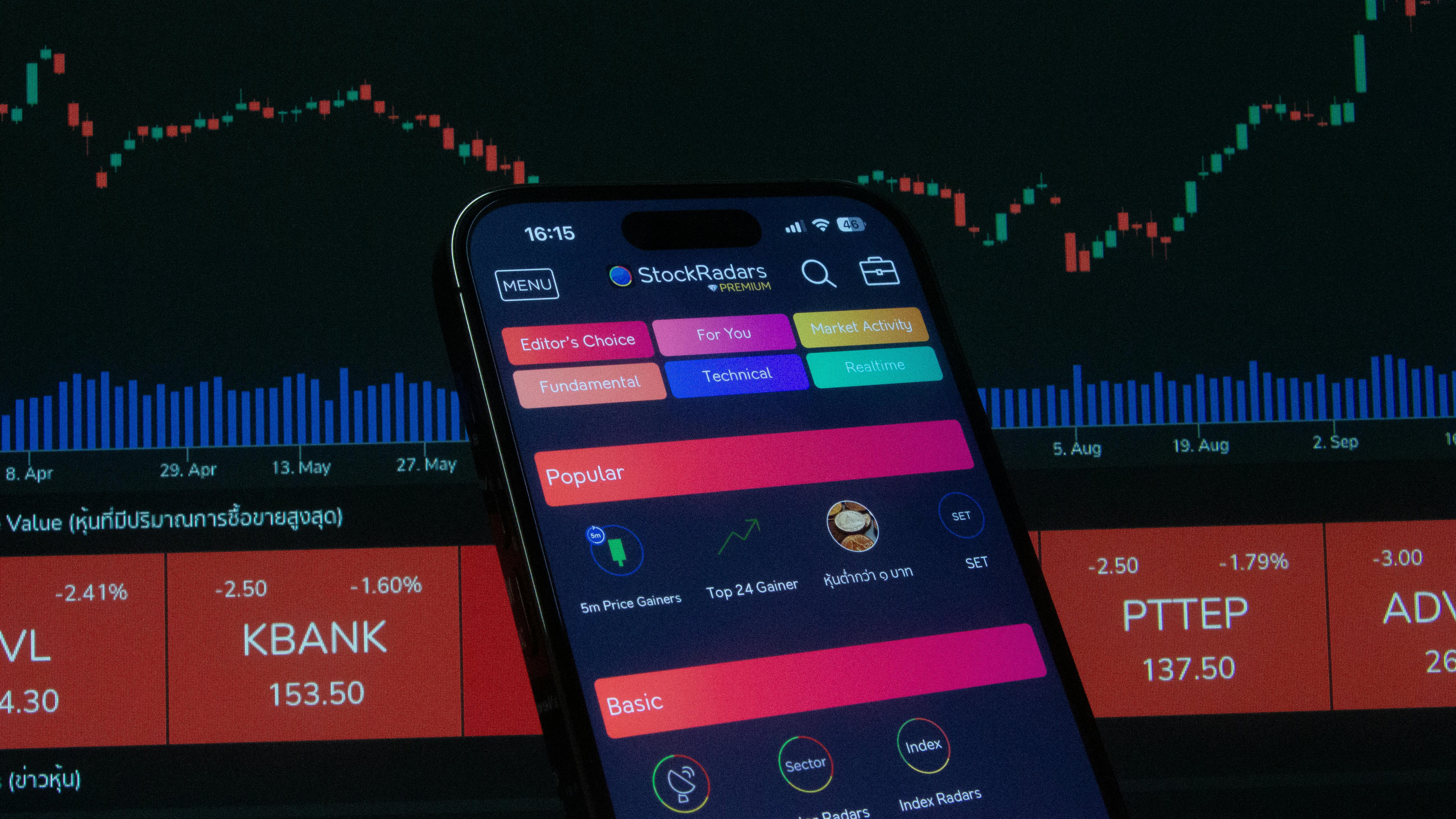
The Art of Profit: Unconventional Trading Strategies for the Bold Investor

The Art of Profit: Unconventional Trading Strategies for the Bold Investor
In the high-stakes world of trading, conventional wisdom often leads to conventional results. While index funds, buy-and-hold strategies, and technical analysis remain staples of the investment landscape, they rarely unlock the outsized gains that define true market mastery. For those willing to step outside the mainstream, unconventional trading strategies can offer a path to profitability that thrives on volatility, asymmetry, and disruption. This guide explores the less-trodden routes to financial success, revealing how bold investors can turn uncertainty into opportunity.
The Psychology of the Unconventional Trader
Before diving into tactics, it’s essential to understand the mindset that separates the unconventional trader from the crowd. These investors thrive on:
- Contrarian Thinking: Embracing positions that contradict prevailing market sentiment, often where others see risk, they see reward.
- Risk Tolerance: Accepting that high-reward strategies often come with high volatility and the potential for significant losses.
- Adaptability: Adjusting strategies in real-time as market conditions shift, rather than clinging to rigid plans.
- Patience and Discipline: Waiting for the perfect setup, even if it takes months or years, rather than chasing fleeting opportunities.
This psychological framework isn’t for everyone, but for those who embrace it, it can be the foundation of a uniquely profitable trading philosophy.
The Power of Asymmetry: Trading Where the Odds Favor You
Asymmetrical trading strategies are those where the potential reward far outweighs the risk. Unlike traditional investing, where profits and losses are often symmetrical, these methods focus on scenarios where a small outlay can yield exponential returns. Here are three approaches that leverage asymmetry:
1. Event-Driven Trading on Corporate Actions
Corporate events such as mergers, acquisitions, spin-offs, and bankruptcies often create asymmetric opportunities. For example:
- Spin-Off Arbitrage: When a parent company spins off a subsidiary, the stock of the new entity may be undervalued due to temporary selling pressure. Traders who identify undervalued spin-offs can profit as the market corrects.
- Merger Arbitrage: In a stock-for-stock merger, the acquirer’s shares may rise while the target’s shares may decline slightly before the deal closes. Traders can exploit this spread by buying the target and shorting the acquirer, profiting from the convergence at closing.
- Distressed Investing: Companies facing bankruptcy or financial distress often see their stock prices plummet. However, if a restructuring or bailout is successful, the rebound can be dramatic. Traders who buy distressed assets early can capture outsized gains.
2. Options Strategies for Leveraged Asymmetry
Options provide traders with the ability to control large positions with a small capital outlay, creating natural asymmetry. Some high-potential strategies include:
- Poor Man’s Covered Call: Instead of buying 100 shares of a stock to write covered calls, traders can use deep in-the-money calls to replicate the position at a fraction of the cost. This allows for higher returns on capital while limiting risk.
- Ratio Spreads: By selling more options than are bought, traders can profit from time decay (theta) while capping losses. For example, a 1×2 ratio spread involves selling two out-of-the-money calls for every one bought, profiting if the stock stays below the strike price.
- Long Straddles/Strangles: Buying both a call and a put on the same stock with the same expiration date can yield massive profits if the stock makes a significant move in either direction. The risk is limited to the premium paid, while the upside is theoretically unlimited.
3. Relative Value Arbitrage in Unrelated Markets
Relative value trading involves exploiting price discrepancies between related assets. While this is common in fixed income or forex, unconventional traders apply it across seemingly unrelated markets:
- Pairs Trading: Identifying two historically correlated stocks (e.g., Coca-Cola and Pepsi) and taking opposing positions when their price relationship diverges. When the correlation reasserts itself, profits are realized.
- Commodity vs. Stock Trades: For example, if gold prices are rising but gold mining stocks are lagging, a trader might go long on the miners and short gold futures, betting on a catch-up move.
- Crypto vs. Traditional Markets: During periods of high crypto volatility, traders may short traditional safe-haven assets (like gold or the Swiss franc) and go long on Bitcoin, betting on a flight to riskier assets.
Exploiting Market Inefficiencies: The Edge of the Bold
Unconventional traders don’t just follow the market—they look for cracks in its efficiency. These inefficiencies are often temporary but can be exploited for quick profits. Some of the most lucrative opportunities arise from:
1. Microstructure Arbitrage
At the most granular level, markets are not perfectly efficient. Traders with access to high-speed data and low-latency execution can profit from:
- Latency Arbitrage: Exploiting delays in price dissemination across exchanges. For example, if a stock trades on NASDAQ at $100.00 and on NYSE at $100.05, a trader with faster data can buy on NASDAQ and sell on NYSE, capturing the spread.
- Order Flow Imbalances: Monitoring unusual order flow (e.g., a surge in buy orders for a stock with no news) can signal impending price moves. Algorithmic traders often capitalize on these imbalances before retail investors react.
2. Behavioral Trading: Playing the Crowd
Human psychology drives many market inefficiencies. Unconventional traders exploit these behavioral quirks:
- Momentum Ignition: Jumping into stocks that are already trending hard, betting that the crowd will continue to pile in. This is risky but can yield quick profits in bullish markets.
- Contrarian Reversals: Fading extreme sentiment—such as shorting stocks with record high short interest or buying those with excessive pessimism—can pay off when sentiment shifts.
- News-Based Spikes: Trading the initial reaction to news (e.g., earnings misses or FDA approvals) before the market overreacts. The key is to exit before the crowd does.
3. Regulatory and Structural Arbitrage
Governments, central banks, and regulatory bodies create opportunities through their actions—or inactions:
- Central Bank Divergence: Trading currency pairs where central banks are pursuing conflicting policies (e.g., the Federal Reserve hiking rates while the European Central Bank cuts them).
- Tax-Lot Arbitrage: Exploiting differences in tax treatment for long-term vs. short-term capital gains by strategically selling losing positions to offset gains.
- Synthetic Assets: Creating custom exposures using derivatives when direct ownership is restricted or expensive. For example, using total return swaps to gain synthetic exposure to a hard-to-borrow stock.
Tools and Technologies for the Unconventional Trader
To execute these strategies effectively, traders need more than just intuition—they require the right tools. The modern unconventional trader leverages:
1. Advanced Data and Analytics
- Alternative Data: Using unconventional data sources like satellite imagery, credit card transactions, or web scraping to gain an edge in predicting company performance or market moves.
- Machine Learning: Deploying algorithms to identify patterns in price action, order flow, or sentiment that human traders might miss.
- Sentiment Analysis: Monitoring social media, news headlines, and even Reddit forums to gauge market sentiment and anticipate reversals.
2. Algorithmic and High-Frequency Trading
For those willing to invest in technology, algorithmic trading can automate the execution of unconventional strategies:
- Market Making: Providing liquidity by continuously quoting bid and ask prices, profiting from the spread while managing risk.
- Statistical Arbitrage: Using mathematical models to identify and exploit mispricings between related assets.
- HFT (High-Frequency Trading): Executing thousands of trades per second to capitalize on fleeting price inefficiencies.
3. Risk Management Innovations
Unconventional trading doesn’t mean reckless trading. The best practitioners use sophisticated risk management tools:
- Volatility Targeting: Adjusting position sizes based on current market volatility to avoid overexposure during turbulent periods.
- Tail Risk Hedging: Using options or other derivatives to protect against black swan events, such as market crashes or geopolitical shocks.
- Scenario Analysis: Stress-testing portfolios against historical crises or hypothetical worst-case scenarios to ensure survival.
Case Studies: Unconventional Traders Who Made Millions
History is filled with traders who defied convention and reaped extraordinary rewards. Here are three examples of unconventional strategies that paid off:
1. The Merger Arbitrageur: Ivan Boesky
In the 1980s, Ivan Boesky became one of Wall Street’s most notorious figures by specializing in merger arbitrage. He would buy shares of companies targeted for acquisition and profit as the stock price converged with the deal price. At his peak, Boesky’s firm managed over $5 billion, though his career ended in disgrace due to insider trading. His story highlights both the profitability and ethical pitfalls of event-driven trading.
2. The Contrarian Genius: Michael Burry
Before the 2008 financial crisis, Michael Burry predicted the collapse of the U.S. housing market by analyzing mortgage-backed securities in detail. He took massive short positions on subprime mortgages, a move that seemed absurd at the time but ultimately earned his fund, Scion Asset Management, billions. Burry’s story is a testament to the power of deep research and contrarian thinking.
3. The Crypto Pioneer: Chris Burniske
As one of the first analysts to advocate for Bitcoin as a legitimate asset class, Chris Burniske’s unconventional approach to crypto investing paid off handsomely. By recognizing Bitcoin’s potential as “digital gold” and advocating for long-term holding (HODLing), he helped legitimize cryptocurrency as an investable asset. His early bets on Bitcoin and Ethereum turned modest investments into life-changing wealth.
Common Pitfalls and How to Avoid Them
Unconventional trading is not without its dangers. Even the most skilled practitioners can fall victim to:
1. Overleveraging
Using excessive leverage amplifies both gains and losses. A 10% adverse move with 10x leverage can wipe out an entire account. Solution: Limit leverage to what you can afford to lose, and use stop-loss orders religiously.
2. Ignoring Risk Management
Unconventional strategies often involve higher risk. Without proper risk management, a single bad trade can destroy a portfolio. Solution: Diversify across uncorrelated strategies, use hedging, and avoid putting all capital into one position.
3. Chasing Trends
Just because a strategy is unconventional doesn’t mean it’s always the right call. Chasing momentum in a crowded trade can lead to catastrophic losses. Solution: Stick to your thesis and exit when the edge disappears.
4. Neglecting Taxes and Compliance
Unconventional trading often involves complex transactions that may trigger unexpected tax liabilities or regulatory scrutiny. Solution: Consult tax professionals and ensure full compliance with local laws to avoid fines or legal trouble.
Building Your Unconventional Trading Playbook
To transition from conventional to unconventional trading, start with these steps:
- Educate Yourself: Study the strategies of unconventional traders like George Soros, Paul Tudor Jones, and Nassim Taleb. Books like *The Alchemy of Finance* and *Antifragile* can provide valuable insights.
- Start Small: Test unconventional strategies with a small portion of your capital to understand their dynamics without risking everything.
- Keep a Trading Journal: Document every trade, including your rationale, execution, and outcome. Reviewing this journal will help refine your approach over time.
- Network with Like-Minded Traders: Join forums, attend conferences, and connect with traders who share your unconventional mindset. Collaborative learning accelerates growth.
- Stay Adaptable: Markets evolve, and so should your strategies. What works today may not work tomorrow, so always be ready to pivot.
The Future of Unconventional Trading
The trading landscape is evolving faster than ever, with new technologies and market structures creating fresh opportunities for unconventional thinkers. Some trends to watch include:
- Decentralized Finance (DeFi): Smart contracts and blockchain technology are enabling peer-to-peer trading without intermediaries, opening doors for arbitrage and yield farming strategies.
- AI and Big Data: Advanced machine learning models are uncovering patterns in data that humans cannot, allowing for even more sophisticated trading strategies.
- ESG and Thematic Trading: Environmental, social, and governance (ESG) factors are creating new arbitrage opportunities as investors shift capital toward sustainable assets.
- Quantamental Investing: The fusion of quantitative and fundamental analysis is giving rise to hybrid strategies that blend data-driven precision with deep industry knowledge.
For the bold investor, the future is not just about keeping up—it’s about leading the charge into uncharted territory. Unconventional trading is not a get-rich-quick scheme; it’s a disciplined, patient, and often counterintuitive approach to profiting in a world where mediocrity is the norm. The rewards for those who master it can be life-changing, but the journey requires courage, skill, and an unwavering commitment to thinking differently.
Are you ready to step off the beaten path and into the realm of the unconventional?